
AI resume matching can help recruiters organize a large applicant pool, but the output is a recommendation, not proof that someone can succeed in the role. A useful system compares the requirements of a job with evidence in a resume, then gives a recruiter a clearer place to begin review. The quality of that result depends on the job criteria, source data, model design, and controls around its use.

HR leaders should evaluate these tools as part of a hiring process, not as a stand-alone shortcut. This guide explains how AI resume matching works, where it can save time, what can go wrong, and how to put human review, accessibility, validation, and candidate communication around it.
What AI Resume Matching Does
AI resume matching converts resumes and job descriptions into structured information that software can compare. Depending on the product, it may identify skills, roles, education, certifications, tenure, industry terms, or related concepts. Some systems rely on keywords. Others use semantic models that can connect different phrases with similar meaning, such as “financial planning” and “FP&A.” The result is often a score, ranking, or recommended group for recruiter review.
The software does not verify that every claim in a resume is true, judge how someone will perform in a new environment, or resolve a vague job description. It reflects the information and rules available to it. Recruiters still need to confirm evidence, consider transferable experience, conduct interviews, and document why a candidate advances or does not.
Where AI Resume Matching Can Help
The strongest use cases remove repetitive sorting while preserving recruiter judgment. A team may use matching to surface applicants who meet required qualifications, rediscover past candidates for a new opening, route applications to the right recruiting team, or compare talent pools against a shared skills framework.
Value appears when the tool shortens the path to a sound review. It does not come from processing more resumes for its own sake. A poor role profile can produce a neat ranking built on the wrong criteria. A strong process begins with job requirements that a hiring manager can explain and defend.
How AI Resume Matching Works
A typical workflow has four parts. First, the system parses job and candidate information into fields or concepts. Next, it compares those concepts using configured rules or a trained model. The tool then produces a score or ranking. A recruiter reviews the result alongside the original application and other evidence.
Different products weigh information in different ways. One may give required certifications a hard threshold. Another may infer adjacent skills from prior roles. Employers need to know which inputs affect the result, whether recruiters can see the reason for a match, and how the system handles missing information.
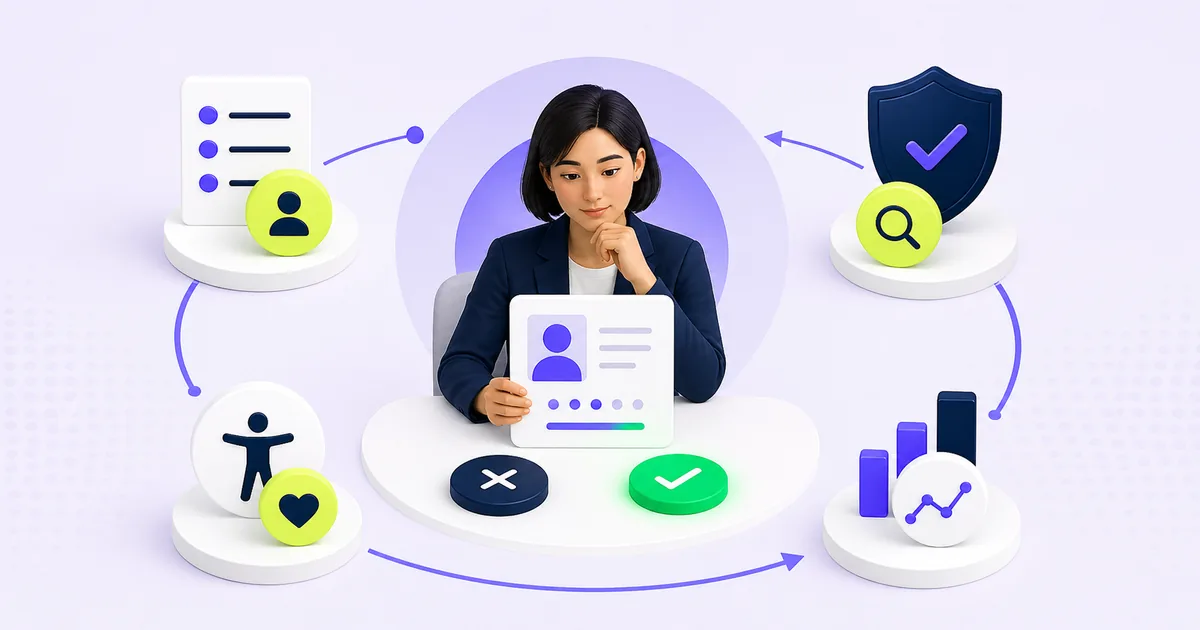
A Better Match Starts with the Job
Matching quality begins before any resume enters the system. The team should separate true requirements from preferences, remove criteria that do not predict success, and define acceptable forms of evidence. A role that asks for ten years of experience when five would support the work can exclude qualified applicants before the model adds any value.
Hiring managers should agree on the required outcomes, core skills, permitted alternatives, and factors that need human interpretation. That creates a review standard for both the tool and the recruiter.
Benefits Worth Testing
AI resume matching may improve several parts of recruiting when the team sets a clear baseline and checks the results:
- Faster initial review: Recruiters can focus attention on a smaller group while retaining access to the full applicant pool.
- Consistent criteria: One documented role profile can guide the first pass across all applications.
- Candidate rediscovery: The system can surface people already in the talent database when a related role opens.
- Better routing: Applications can reach the recruiter or business unit that owns the relevant work.
Each benefit needs a measure. Compare recruiter review time, qualified-candidate recall, candidate movement, and exception rates before and after the pilot. A faster shortlist is not useful if qualified people disappear from consideration or recruiters cannot explain why the system ranked them.
Candidate Experience Still Needs Human Design
Matching software can support prompt review, but it does not improve the candidate experience by itself. Applicants judge the process by the clarity of the job posting, the accessibility of the application, the quality of communication, and whether they can reach a person when the system gets something wrong.
Explain the Role of Automation
Tell applicants when an automated tool plays a material role in screening and describe the information it considers in plain language. Avoid a vague notice that hides the purpose of the system. Candidates should understand what they are submitting, how the employer will use it, and how long the organization plans to retain it.
Offer Help and a Review Path
Provide a clear route for accommodation requests, technical problems, and review of a result. A candidate may use assistive technology, present experience in a format the parser handles poorly, or have a career path that does not fit a standard pattern. A person should be able to examine those cases.
Keep routine updates prompt and specific. Acknowledgment messages, status changes, and next-step instructions can use automation, but rejection and interview communication should reflect the actual process. Clear ownership prevents the tool from becoming a wall between the applicant and the hiring team.
Risks HR Leaders Need to Manage
Resume ranking can influence who receives an interview, so the organization needs controls that match the consequence of the decision. Vendor assurances are not enough. Employers should examine their own job criteria, applicant population, workflow, and outcomes.
Bias Can Enter Through Data and Criteria
Historical hiring data can reflect past preferences, unequal access to opportunity, and job descriptions that favored one profile. A model may also rely on proxies that correlate with protected characteristics. Removing names or demographic fields does not remove those patterns. Test results across relevant groups, inspect false negatives, and review whether each criterion relates to the work.
Accessibility and Accommodation Require a Process
A parser or assessment can screen out a person with a disability even when that person can perform the job with an accommodation. The EEOC advises employers to provide a process for reasonable accommodations and to consider whether a tool disadvantages applicants with disabilities. Recruiters need clear instructions for pausing automation and offering an alternate review method.
Read the EEOC guidance on AI and disability discrimination in hiring.
Privacy and Notice Need Clear Ownership
Resumes contain personal information that may pass through an applicant tracking system, matching vendor, cloud provider, or subcontractor. Define which fields the tool uses, where the data goes, who can access it, how long each party keeps it, and whether the vendor uses it to train other models. Match notices and consent practices to the jurisdictions where the organization hires.
Review New York City guidance for automated employment decision tools.
Governance Continues After Launch
Model behavior, applicant pools, jobs, and recruiter practices change. Assign an owner, set review dates, log material changes, test after updates, and define thresholds that trigger investigation or suspension. NIST organizes AI risk work around four connected functions: govern, map, measure, and manage. That framework gives HR, legal, security, and technology teams a shared way to discuss controls.
Use the NIST AI Risk Management Framework as a governance reference.
How to Evaluate an AI Resume Matching Vendor
Ask for Evidence, Not Assurances
A useful evaluation covers the model, the workflow, and the vendor relationship. Ask the vendor to show:
- Which fields and inferred concepts affect a match.
- How the product treats missing data, career gaps, adjacent skills, and nonstandard resumes.
- Which validation results apply to the version you will use and the jobs you plan to fill.
- How customers test for adverse impact and investigate false negatives.
- Which changes trigger notice, retesting, or a new audit.
- Where applicant data is stored, which subprocessors receive it, and whether the vendor trains on customer data.
Test the Workflow with Your Data
Run a controlled pilot across a small set of roles with clear requirements. Have recruiters review both matched and unmatched candidates so the team can measure what the system misses. Compare the output with an agreed human review process, record disagreements, and examine results across relevant groups.
The pilot should include integration and operating tests as well. Confirm permissions, data mapping, audit logs, recruiter overrides, accommodation routing, and the path for removing or correcting candidate data. Contract terms should cover security, incident response, model changes, data return, deletion, and exit support.
A Practical Implementation Checklist
Treat the rollout as a hiring-process change with technology inside it. HR should bring recruiting, hiring managers, legal, privacy, security, accessibility, and data owners into the design before the tool affects live candidates.
1. Define the Purpose and Decision Rights
Name the problem the tool should solve and the decisions it may support. Document who owns job criteria, who can change thresholds, who reviews exceptions, and which decisions require a person. Keep the full applicant pool available for review during the pilot.
2. Establish a Baseline
Measure the current process before launch. Useful baselines include review time, applications per role, qualified candidates found, stage-conversion rates, accommodation requests, candidate complaints, and recruiter overrides. Segment results where law and policy permit so the team can examine differences rather than rely on one average.
3. Pilot Clear Roles and Record Exceptions
Choose roles with stable requirements and enough volume to test the workflow. Record why recruiters agree or disagree with recommendations. Review people the model ranked low, since false negatives may remain invisible if the team checks only the top of the list. Pause the pilot when results cross an agreed risk threshold.
4. Train Reviewers and Plan Monitoring
Recruiters need to understand the limits of the score, the information the model uses, the accommodation process, and how to document an override. Set a review schedule for performance, fairness, data quality, security, and candidate feedback. Retest after a model update, job-family change, new geography, or material shift in the applicant pool.
How to Measure Whether AI Resume Matching Works
A useful scorecard balances speed with hiring quality, candidate access, and control. Set targets before the pilot and assign an owner for each measure. Review trends by role, recruiter, location, and tool version when the data supports that level of analysis.
Process and Quality Measures
Track measures that show how the workflow performs:
- Recruiter time spent on initial review.
- Share of applicants reviewed outside the recommended group.
- Qualified candidates found in both high- and low-ranked groups.
- Recruiter override rate and reasons.
- Movement from application to interview and offer.
- Candidate response time and process abandonment.
Fairness and Control Measures
Add measures that expose risk and operating discipline:
- Selection-rate and scoring differences across relevant groups.
- False-negative patterns found through sample review.
- Accommodation requests and resolution time.
- Data corrections, privacy requests, and complaints.
- Model changes completed without required review.
- Open issues, owners, and time to resolution.
No single metric proves the system is fair or effective. The team needs several views and a written record of the decisions made from them.
Use AI as Decision Support
AI resume matching earns a place in recruiting when it helps a team find relevant evidence without hiding the basis of the recommendation. Clear job criteria, representative testing, accessible alternatives, privacy controls, and human review matter more than a polished ranking screen.
Start with one defined use case, test the system against the current process, and keep people accountable for the hiring decision. If the tool cannot explain its role, support review, or produce evidence that fits your workforce and jurisdictions, the organization is not ready to rely on it.