
A Workday AMS strategy should protect daily operations and create capacity for continuous improvement. When every request enters the same urgent queue, support teams spend their time reacting, business owners lose visibility, and valuable Workday capabilities remain unused.
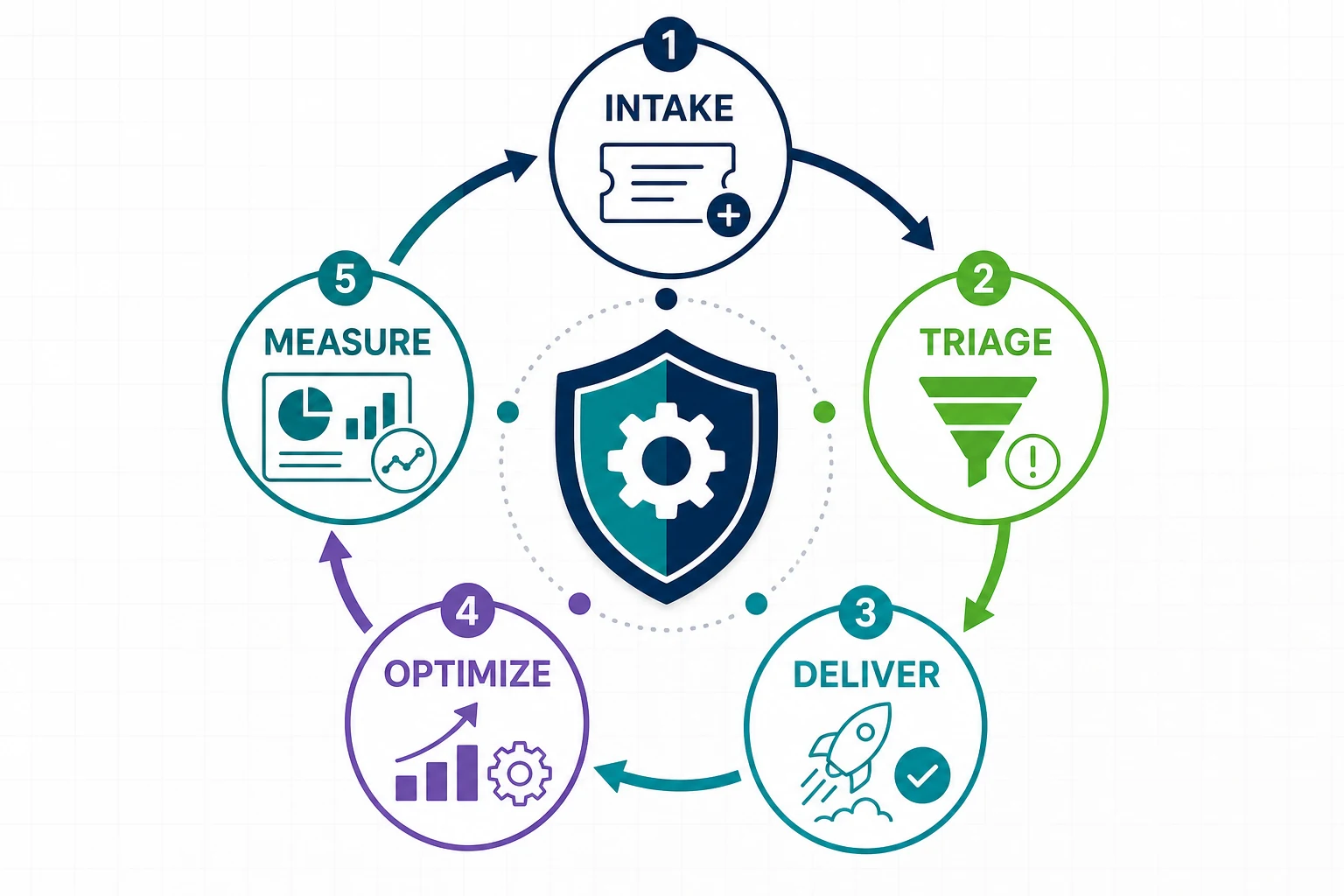
A stronger model separates incidents, service requests, defects, enhancements, and roadmap work. It also gives HR, finance, IT, and security clear decision rights. The eight practices below turn application management services into an operating discipline.
Why Reactive Workday Support Falls Short
Reactive support measures activity instead of business outcomes. Ticket counts can rise while payroll accuracy, close time, reporting quality, and employee experience stay unchanged. Unclear ownership also causes duplicate investigation and risky production changes.
Workday describes support services that include proactive monitoring, health checks, issue detection, and preventative maintenance. Its support overview reinforces the value of preventing disruption alongside resolving cases.
1. Define the AMS Scope and Service Catalog
Document the products, integrations, reports, security domains, business processes, and environments covered by the Workday AMS strategy. List what the internal team owns, what the AMS provider owns, and what requires Workday Support or another vendor.
- Incident diagnosis and resolution
- Scheduled operational tasks
- Configuration and report changes
- Integration monitoring and recovery
- Release assessment and regression testing
- Roadmap and adoption work
2. Create One Intake and Triage Process
Route requests through one visible queue with required fields for business impact, affected population, deadline, environment, and evidence. Use a severity model that reflects operational risk. A broken payroll interface should not compete with a cosmetic report change under the same priority.
Assign a triage owner and escalation path. Track aging, reopened work, repeat incidents, and requests waiting on business decisions.
3. Set Governance and Decision Rights
Name product owners for HCM, payroll, finance, integrations, reporting, and security. Establish who approves scope, accepts risk, schedules production changes, and resolves cross-functional conflicts. The Workday AMS strategy should include a weekly operational review and a monthly roadmap review.
Use a decision log for design choices, deferred work, temporary controls, and policy exceptions. This gives future administrators the context behind the configuration.
4. Plan for Workday Releases
Maintain a release calendar with owners for feature review, impact assessment, configuration, regression testing, communications, and production validation. Prioritize business processes, reports, integrations, and security areas with the highest operational or compliance risk.
Treat optional features as roadmap decisions. Test value, effort, controls, and adoption needs before enabling them.
5. Protect Security and Production Controls
Review privileged access, segregation of duties, service accounts, integration credentials, and temporary administrator access. Require approvals and evidence for production changes. Periodic access reviews should include AMS personnel and internal administrators.
Connect application support to the broader HR data security program. Record incidents, control exceptions, and remediation owners in the same governance process.
6. Build Knowledge Transfer Into Delivery
Require runbooks, configuration notes, test evidence, and handoff sessions for completed work. Pair provider specialists with internal product owners so the organization can make informed decisions and handle routine tasks. Knowledge transfer should occur throughout the engagement, not only at contract end.
Workday Success Plans also emphasize education, expert guidance, and ongoing optimization. Review the available success-plan resources alongside the AMS provider model.
7. Reserve Capacity for Optimization
Set aside planned capacity for automation, report cleanup, process simplification, adoption, and technical debt. A backlog dominated by emergencies signals that root causes and preventative work need more attention.
Rank optimization ideas by business value, control improvement, user impact, effort, and dependency. Fund small improvements alongside larger roadmap items.
8. Measure Outcomes and Provider Performance
Measure response and resolution time, but add business measures such as repeat incidents, integration reliability, release defects, backlog age, adoption, and hours returned to HR or finance. Review trends with the provider and assign corrective actions.
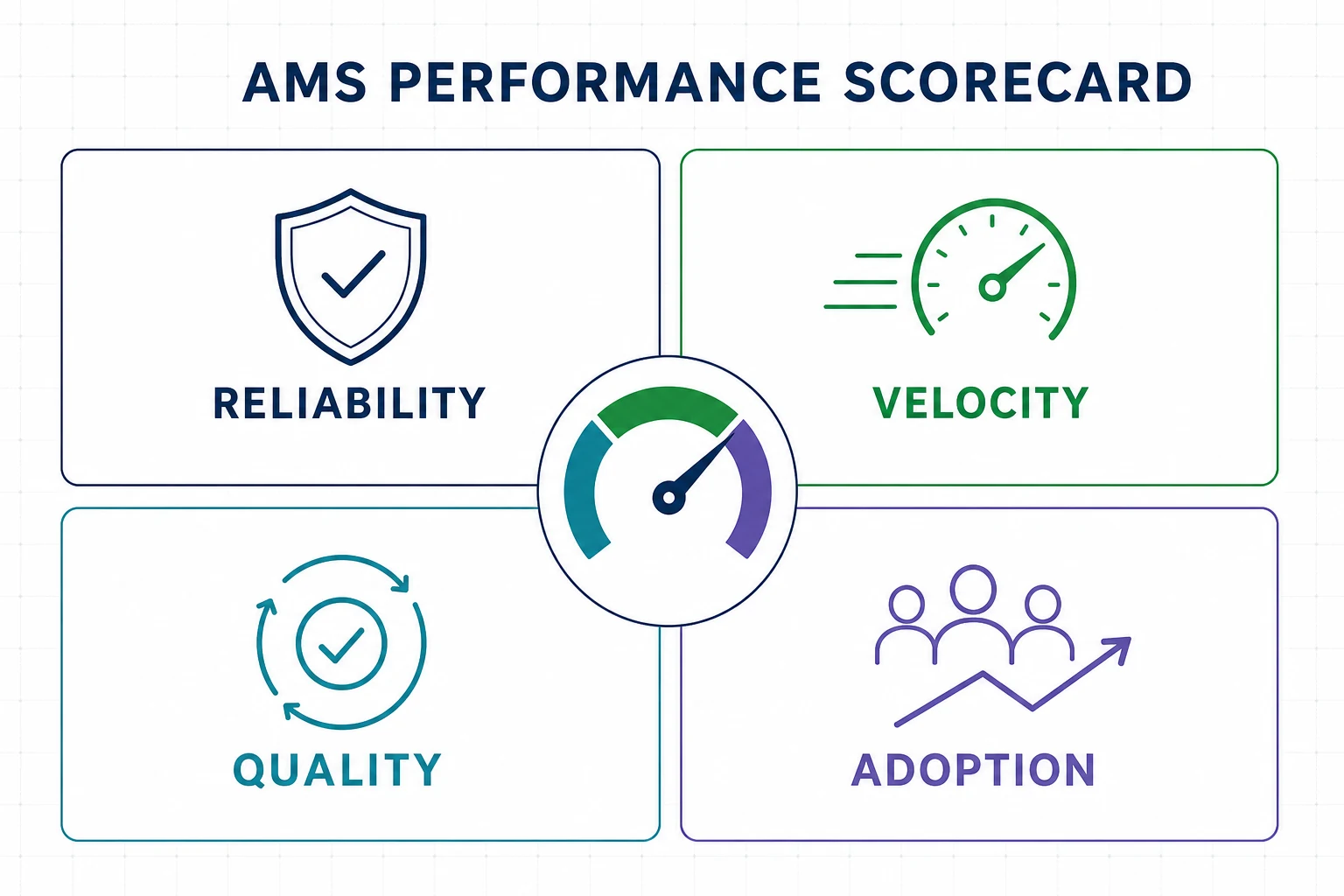
A Workday AMS strategy succeeds when teams reduce preventable work, make safer changes, and deliver a visible roadmap rather than closing tickets in isolation.
Workday AMS Strategy FAQs
What should an AMS provider own?
Ownership depends on internal skills and risk. Define responsibility at the level of products, processes, integrations, reports, security, environments, and approvals.
How often should governance meet?
Review operations weekly and roadmap priorities monthly. Add release-specific checkpoints and executive reviews for major risks or investments.
Can EVOCS assess an existing model?
Yes. EVOCS can review intake, backlog, roles, controls, releases, service levels, and provider performance. Contact EVOCS to strengthen your Workday AMS strategy.