
Workday Adaptive Planning can support more than an annual budget. Finance, HR, sales, and operations can use connected models to test assumptions, compare scenarios, and update plans as business conditions change. The software creates value when leaders also define shared drivers, decision rights, data ownership, and a planning cadence.
A transformation program should therefore treat Workday Adaptive Planning as part of an operating model. This guide explains how to choose a planning scope, connect functional plans, govern assumptions, and move from a model output to an accountable business decision.
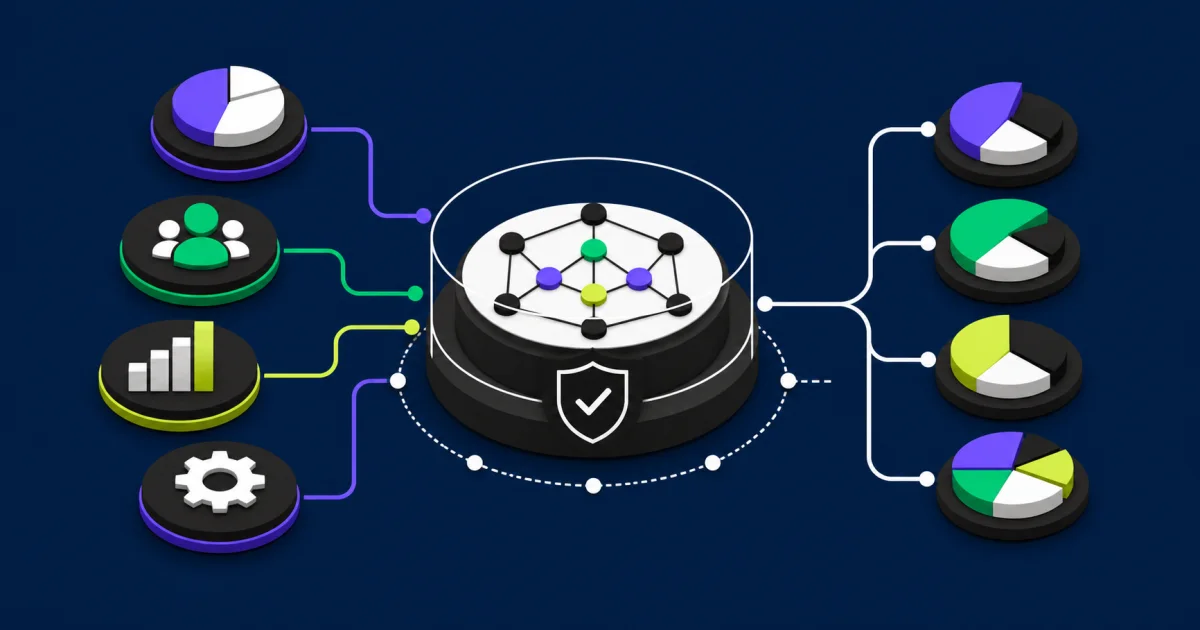
Define the business decisions first
Start with the decisions the organization needs to make. A model built around every available data point can become complex without improving a decision.
For each planning use case, document:
- The decision and accountable owner
- Planning horizon and update frequency
- Business drivers and assumptions
- Required source data and level of detail
- Participants, reviewers, and approvers
- Scenarios the team needs to compare
- Output that authorizes the next action
A workforce-capacity decision may need demand, productivity, location, skills, attrition, and labor-cost assumptions. A project-portfolio decision may need timing, resource capacity, expense, dependency, and expected return. Build only the detail needed to support the decision and explain the result.
Choose a practical transformation scope
Organizations often begin with financial planning, then add workforce, sales, or operational use cases. Expansion can create value when each new model connects to a defined enterprise driver. It can also reproduce departmental silos inside a shared platform when every team creates its own dimensions and assumptions.
Assess candidate use cases against four questions:
- Does the decision require input from several functions?
- Does the current process rely on disconnected spreadsheets or manual consolidation?
- Can the organization name the source and owner for each critical driver?
- Will someone change an action based on the model output?
Sequence use cases according to decision value, data readiness, ownership, and implementation effort. Avoid a companywide rollout that asks every department to redesign planning at the same time.
Build a connected planning model
Workday describes Adaptive Planning as a platform for financial, workforce, sales, and operational planning. Connected planning requires common structures across those domains.
Define shared dimensions such as company, cost center, product, customer segment, geography, project, and time. Decide which system owns each dimension and how identifiers map across source applications.
Connect financial and operational drivers
Financial results should trace to operating activity. Revenue may connect to unit volume, price, capacity, conversion, or retention. Expense may connect to headcount, utilization, project timing, vendor commitments, or facility demand.
Document each driver formula, source, owner, unit of measure, and update schedule. A shared driver should have one approved definition even when several models consume it.
Keep detail at the level planners can maintain
Granularity adds calculation and maintenance work. Plan at the level where a manager can make a meaningful input or decision. Use source systems and reporting tools for transaction detail that does not affect the planning choice.
Establish a source-data contract
A connected model depends on reliable actuals, metadata, and assumptions. For each data source, define the owner, extract method, refresh schedule, reconciliation control, accepted latency, and failure response.
The contract should answer:
- Which system is authoritative?
- Which records and dimensions enter the model?
- How do planners handle late or corrected transactions?
- Which control totals must match the source?
- Who reviews a failed load or mapping error?
- How long can the model operate with stale data?
The EVOCS guide to Workday Adaptive Planning integration covers mapping, orchestration, reconciliation, and support ownership in more detail.
Design scenarios around decisions
Scenario planning gives leaders a structured way to compare assumptions before committing resources. Workday supports driver-based and shareable what-if scenarios, but useful scenarios need defined triggers and actions.
Build a small set that covers material uncertainty:
- Expected case based on approved operating assumptions
- Downside case tied to named demand, cost, or capacity risks
- Upside case tied to a specific opportunity and required resources
- Constraint case that tests a scarce skill, facility, supplier, or funding limit
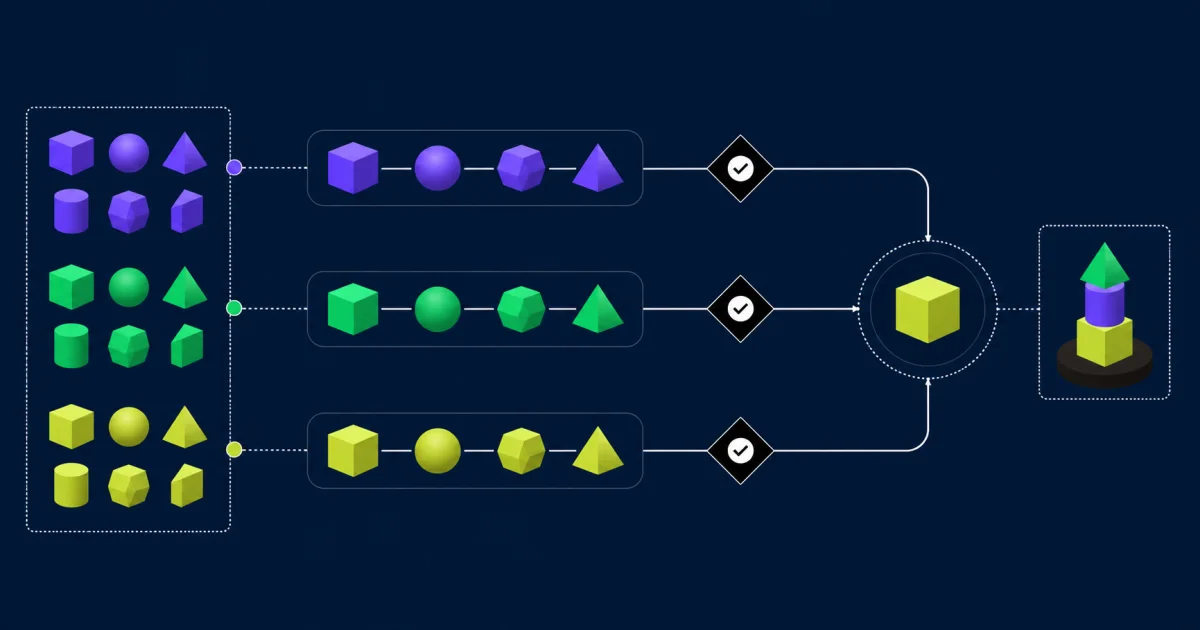
For each scenario, record the assumptions that changed, the owner, the decision threshold, and the action the team will take. Scenarios without an action become presentation material rather than a management tool.
Connect workforce and financial planning
Labor often represents a large share of operating expense and delivery capacity. A workforce plan should connect positions, compensation, hiring timing, attrition, productivity, and skills to financial and operational demand.
Workday documents several workforce-planning approaches, including personnel sheets within financial-planning instances and a separate workforce-planning foundation model connected with Workday HCM.
Choose the approach according to the decision. A finance team may need position-level cost and hiring timing. HR may need skills, capacity, organization design, and talent-supply scenarios. Both teams need consistent workforce totals and assumptions.
Assign owners to shared workforce drivers
HR may own attrition and talent-supply assumptions. Finance may own compensation inflation and budget targets. Operations may own demand and productivity. Document who proposes, reviews, approves, and updates each value.
Create a planning cadence
Continuous planning does not require every team to update every assumption each day. It requires a defined schedule and a way to respond when conditions move outside an agreed range.
A planning cadence can include:
- Monthly actuals load and reconciliation
- Driver-owner review after the close
- Forecast update for material changes
- Quarterly scenario and resource review
- Annual target and long-range planning
- Event-based updates for acquisitions, reorganizations, major contracts, or regulatory changes
Set thresholds for reopening a plan. A minor variance may require monitoring. A change that affects cash, capacity, hiring, or a strategic commitment may require a new scenario and executive decision.
Define roles and decision rights
Planning ownership should not sit with the system administrator. Business leaders own assumptions and decisions. Finance or a planning center of excellence can own standards, model governance, calendar, and consolidation. Administrators support configuration, access, data loads, and releases.
Define four roles for each process:
- Contributor: enters an assumption or operational input
- Reviewer: checks evidence, completeness, and reasonableness
- Approver: accepts the plan or scenario
- Decision owner: commits resources or changes the operating plan
Use workflow and access rules to reflect the agreed process. Do not rely on a technical permission as evidence that a person owns the decision.
Build dashboards for action
A planning dashboard should show the decision owner where performance differs from the approved plan, which driver caused the variance, and what action requires review.
Use a focused set of measures:
- Outcome: revenue, margin, cash, service, or another approved result
- Driver: volume, price, headcount, utilization, conversion, or capacity
- Variance: actual versus plan and forecast versus target
- Threshold: the level that requires review
- Owner: the person responsible for the response
Give users a way to trace a summary back to the relevant model detail and source. The EVOCS article on Adaptive Planning and Prism Analytics explains how planning and analytical data can support different parts of the decision process.
Test the operating model
Model testing should cover formulas, data, security, workflow, and the management process. A correct calculation still fails if no one owns the assumption or knows how to act on the result.
- Reconcile actuals and metadata to each source
- Test formulas at boundaries and across hierarchies
- Compare scenario changes with expected driver impacts
- Validate role-based access and workflow routing
- Run a complete planning cycle with representative users
- Test a late source load and a failed integration
- Confirm that leaders can explain a variance and authorize an action
Keep test evidence for critical calculations and integrations. Repeat focused regression tests after model, source, dimension, or security changes.
Measure whether planning behavior improved
Implementation completion does not prove business transformation. Measure how the planning process works after launch.
Useful operating measures include:
- Time spent collecting and reconciling inputs
- Forecast cycle duration
- Percentage of assumptions with named owners
- Integration and data-quality exceptions
- Variance explanations completed on schedule
- Decisions made through documented scenarios
- User participation and overdue workflow tasks
Forecast accuracy can help evaluate selected use cases, but an accurate forecast does not guarantee a good decision. Review whether leaders changed hiring, spending, capacity, pricing, or project priorities based on the plan.
Common transformation problems
Finance owns every input
Finance becomes a data collector while operational assumptions remain weak. Assign driver ownership to the function closest to the work and keep finance accountable for consolidation and standards.
The model copies the old spreadsheet
The implementation preserves excess detail, manual steps, and unclear definitions. Return to the decision, simplify the model, and remove inputs that no owner uses.
Teams create different versions of shared drivers
Separate headcount, demand, or pricing assumptions produce conflicting plans. Establish one approved definition, source, owner, and effective date for each enterprise driver.
Scenarios have no decision threshold
Teams produce many what-if models but do not know when to act. Name the trigger, decision owner, and resource response for each material scenario.
Questions about Workday Adaptive Planning transformation
Should every department plan in one model?
No. Use connected models where functions need shared drivers, dimensions, or decisions. Preserve separate detail when it does not affect the enterprise plan.
How often should forecasts change?
Match the cadence to decision speed and data availability. Use thresholds and events to trigger updates between scheduled cycles.
Who should own the platform?
A planning center of excellence or finance team can own standards and administration, while business functions own their assumptions and decisions. Document the split.
Does Adaptive Planning replace business intelligence?
Adaptive Planning includes reporting and analytics for planning. Organizations may still use broader analytical platforms for detailed exploration, operational reporting, or data from many domains. Define the role of each tool.
Turn connected plans into accountable action
Workday Adaptive Planning supports business transformation when teams connect models to real decisions. Shared drivers, reliable data, named owners, scenario thresholds, and a clear cadence help leaders use the platform as part of normal management work.
EVOCS helps organizations design planning operating models, integrate source systems, and establish governance that teams can sustain. If your planning program has strong models but weak ownership or adoption, schedule a strategy conversation.