
HR data security compliance starts with knowing which employee data the organization collects, why it needs the data, where the data moves, and who can access it. HR platforms contain identifiers, compensation, benefits, banking, performance, leave, and health-related information.A control program should connect legal requirements with security operations. Privacy notices, retention rules, access reviews, encryption, vendor oversight, and incident response need named owners and evidence.This HR data security compliance guide provides nine controls for 2026. It offers operational guidance, not legal advice. Organizations should confirm obligations with qualified counsel for each jurisdiction and industry.
1. HR Data Security Compliance Starts with a Data Inventory
Create a record of HR systems, integrations, reports, exports, vendors, data categories, purposes, owners, locations, and retention periods. Include spreadsheets and local files used outside the core HR platform.
The inventory gives HR data security compliance teams a basis for access, retention, vendor, and incident decisions.
- Record the system of record for each data category.
- Map transfers to payroll, benefits, recruiting, and analytics providers.
- Review the inventory after releases and vendor changes.
2. Limit Collection and Retention
Collect data for a documented business or legal purpose. Set retention schedules that account for employment, tax, benefits, litigation, and privacy requirements. Delete or de-identify data when the purpose and required period end.
The European Commission's GDPR guidance calls for the shortest necessary storage period while accounting for legal obligations.
- Assign a retention owner to each record class.
- Automate deletion where the platform supports it.
- Test holds and exceptions before production use.
3. Enforce Least Privilege and Strong Authentication
Give users the minimum access required for their role. Require multifactor authentication, review privileged accounts, remove access after role changes, and monitor break-glass accounts.
HR data security compliance evidence should show who approved access, when the team reviewed it, and which exceptions remain open.
- Review high-risk roles at least quarterly.
- Separate administration, payroll, integration, and audit duties.
- Alert on unusual exports and access patterns.
4. Encrypt Data and Protect Integrations
Use current encryption for data in transit and at rest, manage keys, rotate credentials, and restrict integration scopes. Avoid shared accounts and long-lived secrets when the platform supports stronger methods.
Secure APIs and file transfers need logging, error handling, and ownership. EVOCS covers related controls in its guide to Workday authentication and cloud security.
- Inventory certificates, keys, service accounts, and expiration dates.
- Validate the recipient and file contents before every transfer.
- Log failed loads and rejected records.
5. Manage Vendors and Subprocessors
Review vendor security, privacy, breach, deletion, and subprocessor terms before sharing employee data. Confirm the vendor can support access requests, retention rules, audit evidence, and incident coordination.
The FTC Safeguards Rule guidance applies to covered financial institutions and includes service-provider oversight. Other organizations should map the principle to the laws and contracts that apply to them.
- Classify vendors by data sensitivity and business impact.
- Track remediation commitments and renewal dates.
- Test offboarding and data return or deletion.
6. Prepare for Privacy Requests
Organizations subject to the California Consumer Privacy Act, as amended, may need to support rights to know, delete, correct, and limit certain uses of sensitive personal information. The California Attorney General notes that the prior employment-data exemption is no longer in effect.
Use the official California CCPA guidance to confirm current requirements, then document identity verification, search, review, response, and exception steps.
- Identify every system that may contain responsive employee data.
- Set ownership and response deadlines.
- Keep an audit record without retaining unnecessary request data.
7. Build an HR-Specific Incident Plan
The incident plan should cover payroll diversion, unauthorized exports, compromised administrator accounts, lost files, ransomware, and vendor incidents. HR, security, legal, communications, and payroll need assigned roles.
Under GDPR, a controller may need to notify the supervisory authority within 72 hours when a breach is likely to risk individual rights and freedoms. The European Commission breach guidance explains the conditions.
- Preserve evidence and stop unauthorized access.
- Assess affected data, people, systems, and jurisdictions.
- Test notification and payroll-continuity procedures.
8. Govern AI Used in HR
Inventory AI used in recruiting, screening, scheduling, performance, employee support, and workforce analytics. Document the purpose, data, model or service provider, human reviewer, testing, and appeal path.
The European Commission's AI Act guidance identifies certain employment and worker-management uses as high risk and describes obligations for deployers. Application dates and requirements continue to evolve, so teams should verify the current rules.
- Prohibit unapproved HR data from public AI tools.
- Test accuracy, bias, privacy, and security before deployment.
- Keep a human accountable for employment decisions.
9. Measure and Test the Control Program
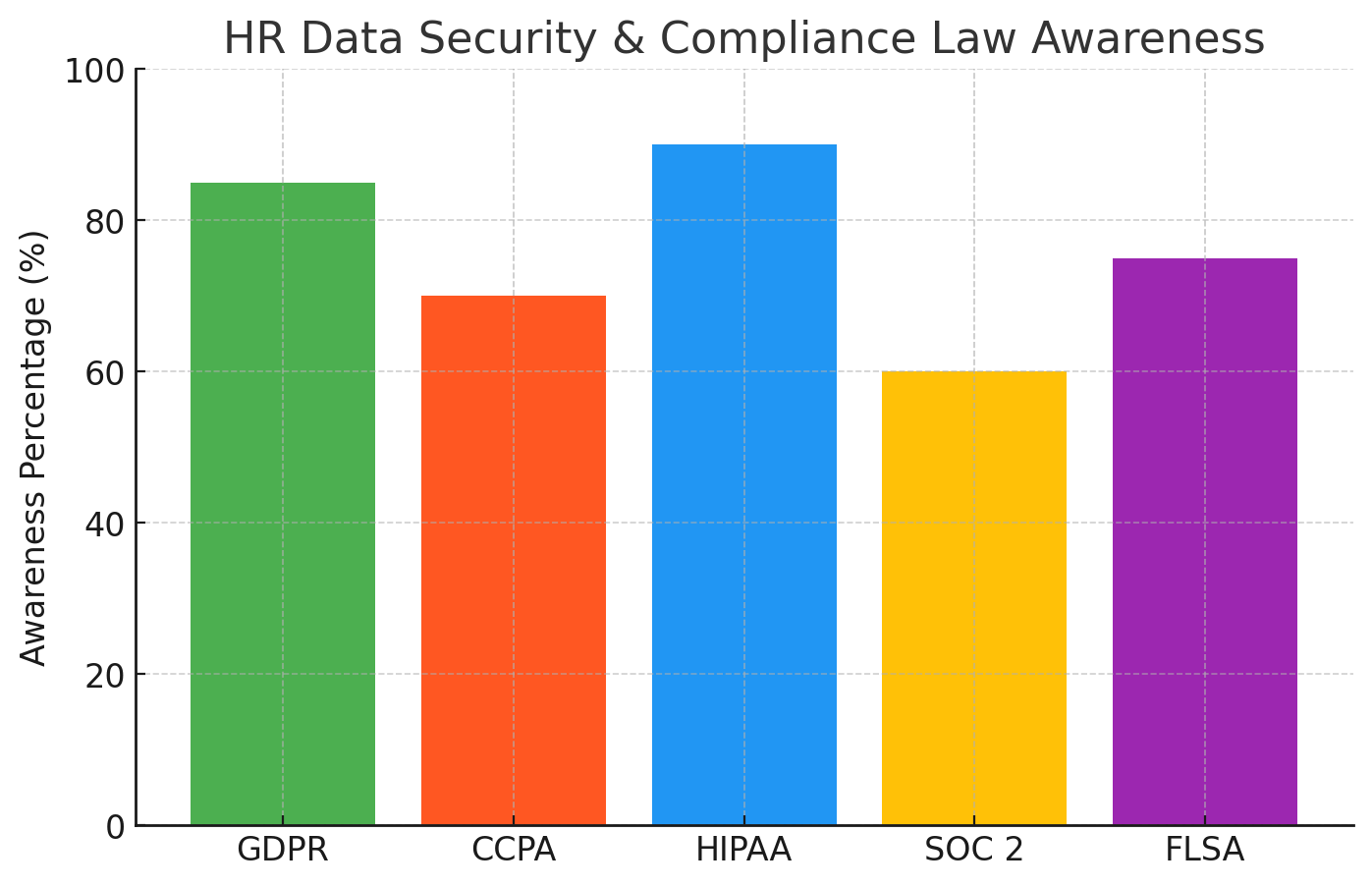
HR data security compliance improves when leaders review evidence and unresolved risk. Track privileged access, stale accounts, vendor findings, unencrypted transfers, incidents, retention exceptions, and training completion.
Use tabletop exercises and access reviews to test whether the documented process works. EVOCS managed services and advisory services can support governance, controls, and operating-model design.
- Report open exceptions with owners and dates.
- Retest controls after major configuration changes.
- Give leaders a short risk-based dashboard.
Create a 90-Day Improvement Plan
Start with the data inventory, privileged access, vendor list, and incident plan. Resolve the highest-risk gaps before adding new tools. Contact EVOCS to assess HR platform controls, integrations, and support ownership.