
An HRIS vendor selection framework gives HR, IT, finance, payroll, security, and procurement one set of criteria for comparing vendors. It connects business requirements to implementation risk, employee experience, integrations, support, and lifecycle cost.
EVOCS uses a practical lens called Fix, Accomplish, and Avoid (FAA). The buying team defines the problems the system must solve, the outcomes it must support, and the risks the project must control. Those decisions shape the shortlist, demo scripts, scorecard, and contract review.
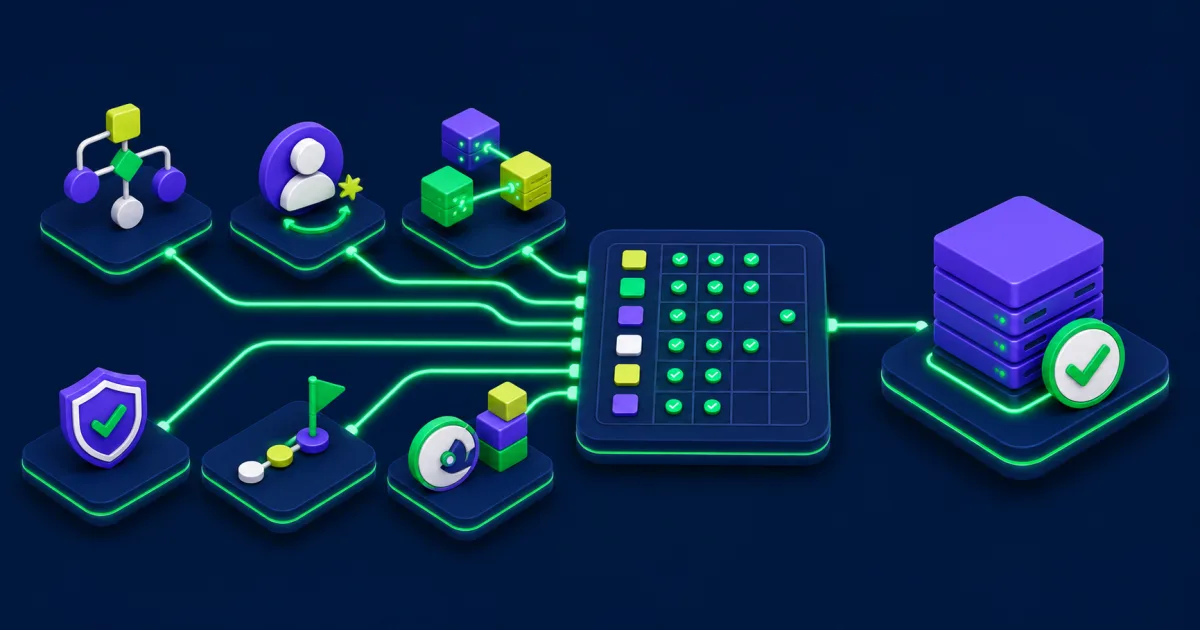
Why HRIS vendor selection goes wrong
Teams create risk when they start with vendor demos before they agree on requirements and decision rights. A polished presentation can hide gaps in payroll, reporting, data ownership, security, or implementation capacity.
- The shortlist reflects brand recognition instead of operating fit
- Evaluators score features without testing real workflows
- Integration and data work appears late in the process
- The budget omits internal effort, support, and change management
A defensible process starts with the operating model, the people who own each process, and the evidence needed to approve a vendor. FAA gives the selection team a simple way to define that foundation.
Use Fix, Accomplish, and Avoid to define the decision
FAA turns broad requirements into decisions the team can test. Use each category to document evidence, owners, and acceptance criteria before a vendor enters a scripted demo.
1. Fix the problems creating friction
Start with the friction your HR and business teams handle now. Ask process owners where work stalls, where data must be corrected, and which controls rely on spreadsheets or manual follow-up.
- Repeated data entry across HR, payroll, finance, and recruiting
- Payroll corrections caused by unclear ownership or poor data
- Manual onboarding, reporting, or compliance work
- Limited manager access to reliable workforce information
- Processes that do not support the planned workforce model
Interview the people who run and receive these services. Tie each issue to a process, owner, frequency, and business consequence so vendors can respond to the same facts.
2. Accomplish clear business outcomes
Define the outcomes the new system must support at launch and after adoption. The buying team should agree on how it will recognize progress before anyone assigns scores.
- Reliable employee and manager self-service
- Approved data flows between HR, payroll, finance, and recruiting
- Reporting that supports leaders and operating teams
- Consistent onboarding and workforce administration across required locations
- Clear ownership for system changes, data quality, and support
Choose measures the organization can track, such as payroll corrections, onboarding cycle time, service-request volume, or report preparation time. A vendor should explain how its product and delivery plan support those measures.
3. Avoid delivery and operating risks
Document the outcomes the team cannot accept. This gives evaluators a clear basis for rejecting a solution that creates too much delivery, compliance, cost, or adoption risk.
- Dependence on roadmap features for a launch requirement
- Unpriced integration, migration, or support work
- Roles and permissions that cannot meet policy requirements
- A rollout plan that exceeds internal capacity
- Contract terms that leave ownership or service expectations unclear
Assign an owner to each risk and record the evidence needed to close it. Open risks should remain visible in the scorecard, implementation plan, and contract discussions.
Build an HRIS vendor selection scorecard around evidence
Business and process fit
Score the workflows that determine whether the platform fits the operating model. Review the standard product before accepting custom work, and ask who owns each configuration after launch.
- Core HR, payroll, benefits, time, recruiting, and talent processes in scope
- Employee and manager tasks across desktop and mobile use
- Reporting, approvals, audit history, and exception handling
- Country, entity, worker-type, and language requirements
Separate mandatory requirements from weighted preferences. A vendor that fails a launch requirement should not recover through strong scores in unrelated categories.
Integrations, data, and security
Map each source, destination, owner, frequency, and control before vendors estimate the work. Include payroll, finance, identity, recruiting, benefits, learning, and any local providers in scope.
- Supported integration methods, monitoring, and error handling
- Data migration scope, cleansing ownership, and reconciliation
- Role design, access reviews, audit records, and retention
- Data residency, subprocessors, incident terms, and product-security evidence
Bring IT, security, privacy, and data owners into the evaluation before the shortlist becomes a preferred vendor. Their findings should affect the score and contract requirements.
Delivery, support, and lifecycle cost
Compare the full delivery model, including the software vendor, implementation partner, internal team, and ongoing support. Review named responsibilities, decision paths, release management, and the support model after launch.
Lifecycle cost should include subscription fees, implementation, integrations, data work, internal staffing, training, support, and expected change. Record pricing assumptions so the team can compare vendors on the same scope.
Run scripted demos and validate vendor claims
Set decision rules before the demos
Agree on mandatory gates, weighted criteria, evaluators, and the final decision owner before the first scripted demo. Document how the team will handle ties, exceptions, and conflicts of interest.
Use the same scenarios for every finalist
Give each finalist the same business scenarios, sample data, roles, and time limits. Ask vendors to show complete workflows, including approvals, errors, reporting, and administrator steps.
Capture evidence instead of impressions
Evaluators should record what the vendor showed, what required configuration, and what remains unproven. Use follow-up sessions for open items instead of awarding credit for a verbal assurance.
Assess implementation readiness
Review data readiness, integration capacity, testing ownership, change impacts, training needs, and the availability of subject-matter experts. A sound product choice can still fail if the delivery plan exceeds the organization's capacity.
Record assumptions and risks
Keep one log for unresolved requirements, dependencies, costs, risks, and vendor exceptions. Assign an owner and due date to each item so the final recommendation reflects current evidence.
Tie material commitments to the contract
Place material pricing, scope, security, service, integration, and roadmap commitments in the contract or statement of work. Sales presentations and demo notes do not provide the same protection.
Move from selection to implementation
EVOCS can help your team define requirements, run a structured evaluation, and prepare the selected platform for implementation. Start with a focused conversation about your operating model, constraints, and decision timeline at https://evocs.tech/contact/.
HRIS Vendor Selection Decision Checklist
- Define business outcomes, launch requirements, and decision rights
- Separate mandatory gates from weighted preferences
- Run the same scripted scenarios with every finalist
- Score business fit, experience, integrations, security, delivery, support, and lifecycle cost
- Record assumptions, exceptions, owners, and contract commitments
CISA’s Secure by Demand guidance provides practical product-security questions for buyers. Use it with EVOCS guidance on how to select an HRIS provider.
Security and sourcing evidence
Ask each finalist for current security documentation, subprocessor information, incident-notification terms, data-location details, and evidence for product-security practices. Security and legal teams should record open items and decide which conditions belong in the contract.
Common HRIS vendor selection questions
What is HRIS vendor selection?
HRIS vendor selection is the process of evaluating HR technology platforms based on business needs, system requirements, scalability, implementation complexity, and long-term support.
How do you choose the right HRIS vendor?
Start by defining what the organization needs to fix, what it wants to accomplish, and what risks it needs to avoid. Then compare vendors against those requirements instead of relying only on demos or feature lists.
What should be included in an HRIS requirements blueprint?
An HRIS requirements blueprint should include core HR processes, integrations, reporting needs, security requirements, employee experience goals, compliance needs, and implementation priorities.
Why do HRIS implementations fail?
HRIS implementations often fail because requirements are unclear, stakeholders are misaligned, data is not ready, integrations are underestimated, or the selected system does not match the organization’s operating model.
How does EVOCS support HRIS vendor selection?
EVOCS helps organizations clarify requirements, compare vendor options, identify implementation risks, and choose HR technology that supports both current needs and future growth.