
A Workday supervisory organization hierarchy controls more than the org chart. It connects workers, managers, jobs or positions, inherited roles, business-process routing, reports, security, compensation planning, and downstream integrations. A hierarchy error can therefore remain visually subtle while sending approvals, access, or reporting totals through the wrong management branch.
Reliable hierarchy management requires clear ownership, controlled staffing events, reorganization procedures, effective-dated testing, and recurring audits. This guide explains the relationships that matter and the controls HR operations and Workday administrators should maintain.
How Workday Supervisory Organizations Work
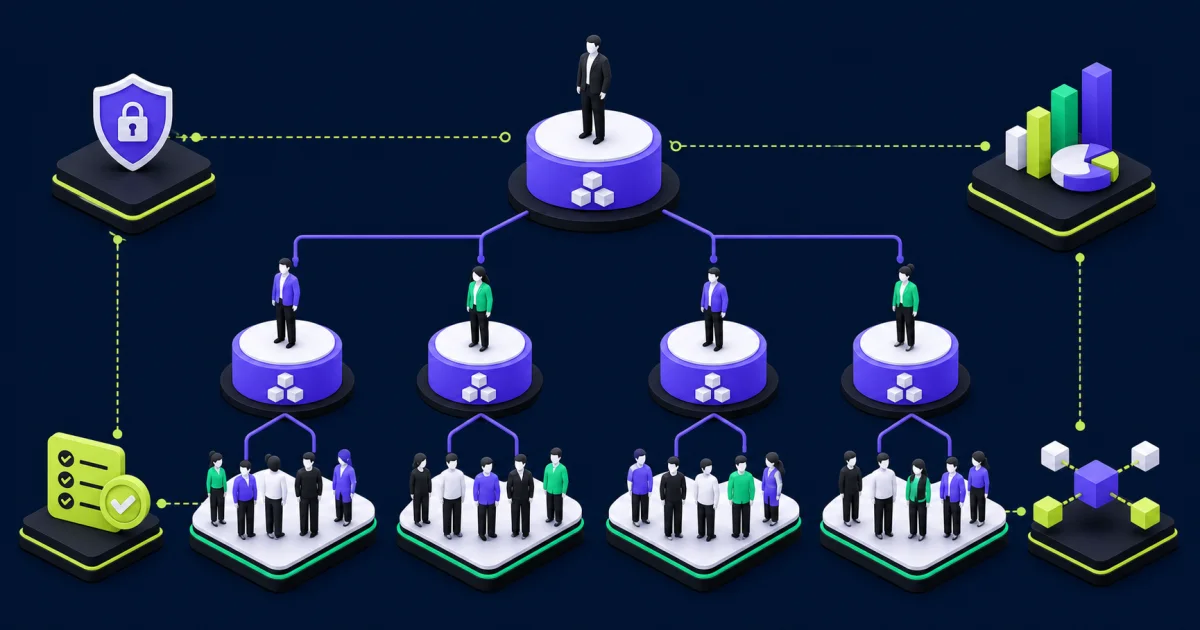
A supervisory organization groups workers into a management hierarchy. Each organization has a manager role, contains workers through jobs or positions, and can sit beneath a superior organization. The resulting hierarchy represents reporting relationships and provides organizational context to Workday processes.
Workday’s guidance on superior and subordinate organizations states that a supervisory organization can have one superior organization, multiple subordinate organizations, and membership in one supervisory hierarchy. Jobs, positions, compensation structures, and role assignments can all depend on that structure.
The manager of a supervisory organization is not a member of the same organization as the workers they manage. The manager belongs to another supervisory organization higher in the management structure. That design makes the relationship between managers, teams, and superior organizations important during transfers and reorganizations.
Distinguish the Management Chain From the Organization Hierarchy
The management chain follows a worker to their manager and then upward through successive managers. The supervisory organization hierarchy follows one organization to its superior organization and then upward through organizational nodes. The two views often appear aligned, but separate transactions can affect them.
Consider a manager who leads an analytics team and reports to an engineering director. The manager belongs to the engineering director’s supervisory organization, while the analytics team belongs to a separate supervisory organization managed by that manager. The analytics organization should sit beneath the appropriate engineering organization.
If the manager transfers to a different division and keeps the team, the worker’s management relationship can change while the team’s supervisory organization remains under its former superior. The org chart may show the direct reports under the correct manager, yet hierarchy-based reports and rules still follow the old superior organization.
Why Hierarchy Errors Matter
Supervisory organizations provide context to many parts of Workday. A misplaced or detached organization can affect:
Reporting: Reports that prompt for a supervisory organization and include subordinate organizations can omit a team or include it under the wrong leader.
Business-process routing: Condition rules and role-based steps may evaluate the wrong superior organizations or inherit the wrong role assignees.
Security: Constrained security groups that use current, superior, or subordinate organizations can grant or remove access unexpectedly.
Compensation: Planner assignments, budgets, participation, and rollups can follow the wrong branch during compensation review.
Talent and performance: Review populations, succession views, goals, and manager access may not match the intended structure.
Workforce planning: Headcount, position, vacancy, and cost assumptions can roll to the wrong organization.
Integrations: Downstream systems that consume supervisory organization or manager hierarchies may reproduce the error.
These effects make hierarchy quality an operational control rather than an org-chart maintenance task.
Assign Ownership and Design Standards
HR operations should own the business meaning of the management structure. Workday administrators should control configuration, security, business processes, and technical validation. Compensation, payroll, finance, talent, reporting, identity, and integration teams need defined review points when a hierarchy change affects their processes.
Document standards for:
- Organization names and codes.
- Effective dates and availability dates.
- Manager-role assignment.
- Superior-organization selection.
- Staffing model and hiring restrictions.
- Default organization assignments.
- Inherited and directly assigned roles.
- Empty organizations and vacant manager positions.
- Inactivation, reactivation, and retention.
- Reorganizations, acquisitions, and divestitures.
State which fields support business use and which exist for technical administration. A name should remain understandable to users, while a stable reference code can support integrations and reconciliation without encoding changeable business attributes.
Understand Staffing Models and Restrictions
Each supervisory organization uses one staffing model: position management or job management. The model influences how the organization defines and fills work, what moves during staffing changes, and which restrictions apply.
Workday’s staffing-model documentation explains that subordinate organizations inherit the staffing model of the parent when created through the subordinate-organization process. Workday also limits some moves to organizations using the same staffing model.
Review hiring restrictions when teams move or organizations are created. Job profiles, locations, worker types, time types, and other restrictions can affect recruiting, hiring, and position management. Confirm whether the new organization should inherit the parent’s values or receive approved differences.
Do not change a staffing model as a routine correction. Profile active workers, open positions or jobs, requisitions, staffing events, integrations, and reporting dependencies before considering a structural change.
Control Manager Transfers and Team Moves
A manager transfer requires a decision about the manager’s team. The team may move with the manager, remain with the former organization, split through a planned reorganization, or move under an interim leader. Capture that decision before the staffing event begins.
Workday’s current Move Manager’s Team documentation explains that Change Job can move eligible teams with a manager when the required steps are configured. Workday initiates an Assign Superior subprocess for each eligible team, and each subprocess can have its own workflow and approval.
Configuration and eligibility depend on the tenant and event. Test your Change Job templates, condition rules, role assignments, completion sequence, approvals, and security. Avoid presenting one set of subprocess steps as universal because customers may use different configurations and Workday experiences.
Use a deliberate transaction choice. Moving an individual contributor between organizations is different from changing the job of a manager and deciding whether subordinate teams move. Train self-service initiators to recognize when a request needs HR or administrator review.
Run Reorganizations as Controlled Events
A reorganization should have an approved target structure, effective date, transaction plan, dependency map, test plan, and rollback or correction approach. Do not rely on a list of manager names as the design record.
Prepare a crosswalk that shows:
- Current supervisory organization and superior.
- Proposed supervisory organization and superior.
- Current and proposed manager.
- Workers, jobs, positions, vacancies, and requisitions in scope.
- Roles that move, remain, or require reassignment.
- Staffing restrictions and organization assignments.
- Reports, business processes, integrations, and security groups affected.
- Effective date, owner, approver, and validation status.
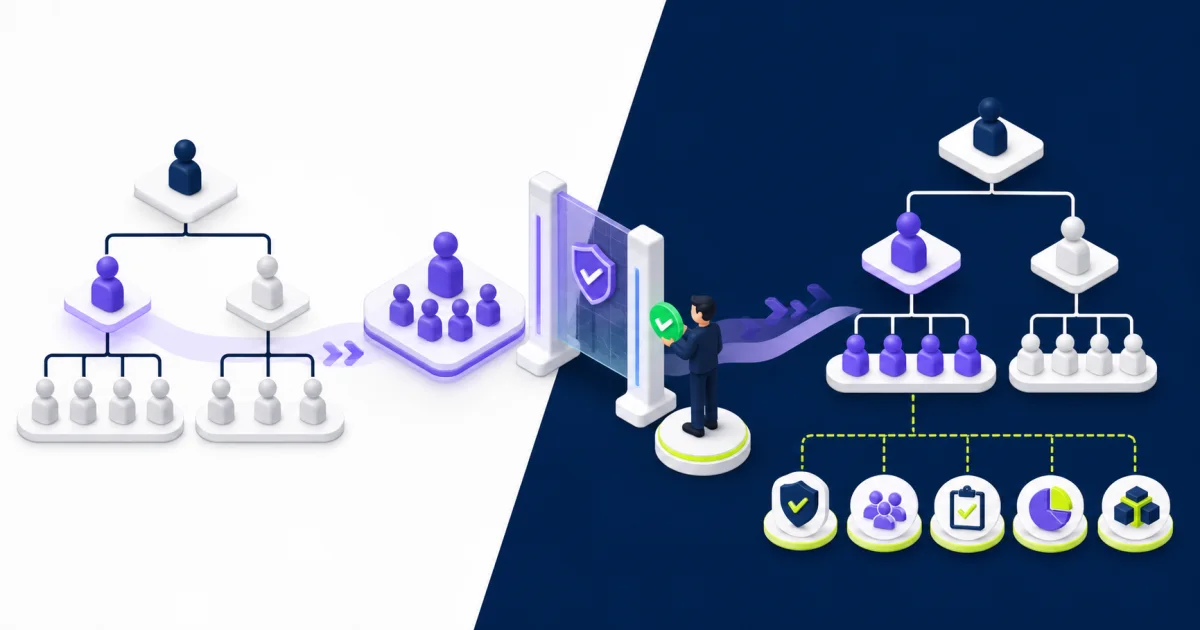
Sequence transactions so that the required organizations, roles, and relationships exist before workers or teams depend on them. Account for in-progress staffing events, future-dated changes, payroll timing, recruiting activity, compensation cycles, and integration schedules.
Freeze or tightly govern competing structural changes during the cutover window. Two valid transactions can still conflict when they change the same organization or worker with different effective dates.
Review Role Inheritance and Security
Roles assigned to supervisory organizations can inherit through the hierarchy. A superior-organization change can therefore alter who receives tasks, sees reports, accesses worker data, or approves transactions.
Build a before-and-after security review for:
- Manager, HR Partner, HR Business Partner, recruiter, compensation partner, and other organization roles.
- Direct assignments versus inherited assignments.
- Constrained security groups using current, superior, or subordinate organizations.
- Organization visibility rules.
- Delegations and temporary assignments.
- Integration and service-account access.
- Confidential or restricted populations.
Workday documents organization visibility separately from role-based access. Test both concepts with representative users because a role’s domain permission and an organization’s visibility setting can produce different outcomes.
Remove obsolete direct assignments after the new structure is validated. Leaving old roles in place can conceal an inheritance problem and retain access beyond the business need.
Build a Recurring Hierarchy Audit
An effective audit identifies conditions that indicate a broken or risky structure. One useful comparison checks whether the manager of a supervisory organization reports through the same branch represented by the organization’s superior. Treat differences as exceptions for review, not automatic proof that the hierarchy is wrong. Matrix relationships, interim arrangements, and approved exceptions may require a different interpretation.
Monitor:
- Supervisory organizations without a valid superior, excluding approved top-level organizations.
- Organizations whose manager relationship and superior hierarchy do not align.
- Missing, inactive, or duplicate manager-role assignments.
- Empty organizations with active roles, restrictions, positions, or downstream references.
- Vacant manager positions and interim coverage.
- Organizations with unexpected inherited roles.
- Future-dated changes that overlap or conflict.
- Teams excluded from expected subordinate-organization reports.
- Recent hierarchy changes without completed downstream validation.
Assign an owner and resolution date to each exception. Preserve the approved reason when an exception is intentional so it does not return as an unexplained item in every audit cycle.
Handle Empty Organizations and Vacant Managers
An empty organization is not automatically obsolete. It may hold open positions, requisitions, inherited security, planning assumptions, or a future-dated staffing need. A vacant manager position may also be intentional during recruiting or succession.
Review the organization’s active workers, jobs, positions, requisitions, restrictions, roles, business-process references, reports, integrations, and planned events before inactivation. Confirm where remaining subordinate organizations should sit and who should receive inherited tasks during the vacancy.
Use interim assignments with an end condition. Temporary arrangements that remain undocumented often become permanent security and routing defects.
Test Every Downstream Dependency
Validate the hierarchy at the proposed effective date and after the event completes. Include current, future, and historical views where the business depends on them.
A practical regression set covers:
- Org charts and worker-to-manager relationships.
- Supervisory organization and include-subordinates reports.
- Business-process conditions, routing, approvals, and notifications.
- Security access for managers and functional roles.
- Compensation planning, budgets, and participation.
- Talent, performance, succession, and goal populations.
- Workforce plans and headcount reports.
- Payroll, costing, and financial organization assignments where applicable.
- Identity, learning, service-management, and other downstream integrations.
- Mobile and self-service experiences for affected users.
Record expected results before testing. A page that loads without an error does not prove that the correct organization, worker population, approver, or role assignee appears.
Use a Controlled Remediation Process
Confirm the Intended Structure
Ask the accountable business owner to approve the target hierarchy. Do not infer the intended superior organization from the current manager alone when a reorganization, matrix relationship, or interim assignment may exist.
Assess Effective-Dated and In-Progress Events
Review future changes, pending staffing events, compensation cycles, payroll deadlines, and integrations. Choose a correction date that preserves history and avoids conflicting transactions.
Correct Through the Appropriate Business Process
Use the tenant’s approved reorganization or staffing process, including required approvals. Avoid direct or bulk changes that bypass the evidence and controls expected by the operating model.
Validate Roles and Downstream Results
Run the hierarchy audit again, test security and routing, reconcile affected reports and integrations, and remove obsolete role assignments. Record the correction and any remaining exception.
Prevent Recurrence
Update the initiating process, condition rule, training, request form, or monitoring control that allowed the error. A cleanup without prevention creates another backlog.
Common Supervisory Organization Mistakes
Using the org chart as the only test: Direct reports look correct while the organization remains under the wrong superior.
Moving a manager without deciding what happens to the team: Worker and organization relationships separate.
Assuming roles will correct themselves: Direct assignments, inheritance, and visibility receive no review.
Inactivating every empty organization: Open positions, requisitions, roles, and downstream references lose their intended context.
Changing the hierarchy during a major cycle: Compensation, payroll, talent, or planning populations shift without coordinated testing.
Using one report total as reconciliation: Routing, security, and integrations remain untested.
Presenting tenant-specific steps as universal: Administrators copy configuration without checking their staffing model, security, and Workday experience.
Keep the Hierarchy Reliable
A dependable Workday supervisory organization hierarchy requires coordination between business ownership and system control. Define the target structure, use the correct staffing and reorganization processes, validate inherited roles, reconcile downstream dependencies, and monitor exceptions on a recurring schedule.
EVOCS can help organizations assess hierarchy health, design reorganization controls, test downstream effects, and establish sustainable administration through its implementation and managed services practices. The Workday business process framework guide provides additional context for routing, conditions, approvals, and governance.