
HiBob employee experience improves when the system makes everyday work clear, reliable, and easy to complete. For a small or midsize business, that means more than launching a modern HR platform. It means designing the journeys employees and managers use from onboarding through offboarding, assigning ownership, connecting the right systems, and improving the experience with evidence.
This guide explains how to build that operating model without adding unnecessary process. The goal is a practical experience in which people know what to do, managers can act without chasing HR, and the business can trust the underlying data.
What Employee Experience Means in HiBob
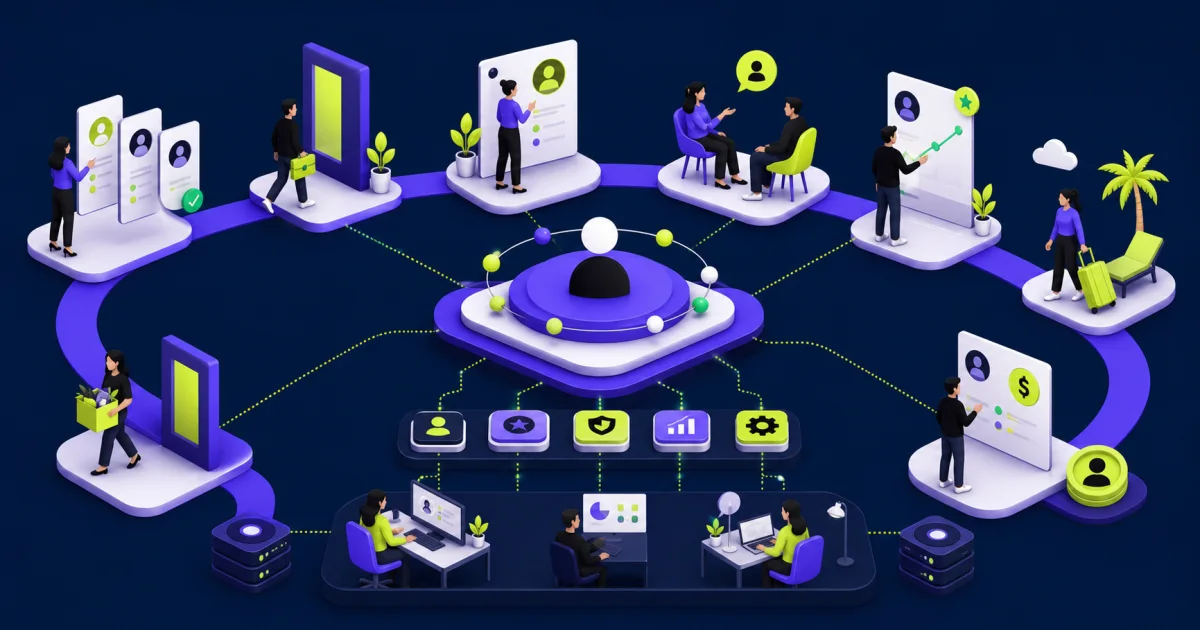
Employee experience is the sum of the interactions people have with the company, its managers, and its systems. In HiBob, those interactions may include completing onboarding tasks, updating personal information, requesting time away, finding a policy, participating in a check-in, reviewing compensation information, or leaving the organization.
A good experience is not defined by appearance alone. It is visible in whether a person can complete a task accurately, understand what happens next, and get help when something goes wrong. HiBob describes its Core HR capabilities as a shared foundation for people data, organizational structure, workflows, and employee self-service. That foundation can support better journeys, but the quality of the outcome still depends on configuration, governance, and adoption.
Start With the Employee Journeys That Matter Most
SMEs rarely need to redesign every HR process at once. Start with journeys that affect many people, create repeated administrative work, or carry meaningful operational risk. A short discovery exercise with employees, managers, HR, payroll, IT, and finance can reveal where the current experience breaks down.
Useful questions include:
- Which tasks generate the most questions or reminders?
- Where do employees enter the same information more than once?
- Which approvals frequently stall?
- What information do managers struggle to find?
- Which handoffs create payroll, access, or compliance risk?
- What should employees be able to complete without HR intervention?
Choose three to five priority journeys and document the current steps, owners, systems, decision points, and failure modes. This keeps the work grounded in real behavior instead of a long list of product features.
Build a Reliable People-Data Foundation
Every employee journey depends on accurate data. Reporting lines influence approvals and visibility. Employment status and location affect policies. Dates drive onboarding, probation, benefits, and offboarding tasks. If these fields are inconsistent, even a well-designed workflow can produce a poor experience.
Define a clear owner for each critical field and agree on the authoritative source. Establish simple rules for data entry, validation, corrections, and periodic review. Limit required fields to information the business genuinely uses, and explain why sensitive information is collected.
Before automating a journey, test the data that triggers it. A useful foundation includes:
- Current employee and manager records
- Consistent departments, locations, and job information
- Documented effective-date rules
- Role-based permissions aligned to responsibility
- A process for correcting errors quickly
- Named owners for integrations and downstream data
Design Onboarding as One Connected Journey
Onboarding crosses HR, the hiring manager, IT, payroll, facilities, and the new employee. The experience feels fragmented when each team runs its own checklist without shared timing or ownership.
Begin with the employee's first meaningful outcome: being ready to contribute. Work backward from that outcome to define what must happen before day one, during the first week, and through the first several months. Assign every task to a role, give it a due date, and make exceptions visible.
A practical onboarding design may include:
- Preboarding information and required documents
- Payroll and personal-data checks
- Equipment and account provisioning
- A manager welcome and role expectations
- Introductions to the team and key partners
- Required learning with realistic deadlines
- Scheduled check-ins at agreed milestones
Automation should reduce coordination work, not hide it. Managers still need to welcome the employee, set context, and remove obstacles. HR should monitor overdue or failed steps and provide a clear route for help.
Make Everyday Self-Service Dependable
Self-service works when employees can complete common tasks without uncertainty. Keep forms concise, use familiar language, and show whether a request was submitted, who owns the next step, and when the employee should expect a response.
Time-away requests are a useful test. Employees need the correct balance and policy, managers need enough context to decide, and payroll may need the approved result. Test the standard path as well as cancellations, corrections, overlapping requests, manager absence, and employees who change teams or locations.
Give employees one obvious place to start. Avoid publishing several versions of the same policy or sending people to different channels depending on who answers. A small, maintained knowledge base is more useful than a large collection of stale documents.
Design the Manager Experience Deliberately
Managers are central to the employee experience, but they often receive new system tasks without enough guidance. Define what managers own, what HR owns, and when an issue should be escalated. Then give managers short instructions at the moment they need them.
For check-ins and performance conversations, focus on useful dialogue rather than form completion. Keep prompts relevant to the role, separate development conversations from administrative updates where appropriate, and train managers to provide specific feedback. HiBob can provide structure and reminders; it cannot replace manager judgment or trust.
Manager adoption can be observed through completion times, overdue actions, correction rates, and repeated support questions. Use those signals to improve the workflow or guidance before adding more reminders.
Connect Development to Real Work
Learning and development are more credible when employees can see how an activity relates to their role or next step. Use a simple capability framework, agree on a small number of development priorities, and connect learning to regular manager conversations.
Do not treat course completion as proof of growth. Combine participation data with evidence such as new responsibilities, demonstrated skills, manager observations, internal movement, or reduced dependence on support. This gives leaders a more honest view of whether development activity is changing performance or opportunity.
Handle Compensation With Clarity and Control
Compensation workflows affect trust because they involve sensitive information, consequential decisions, and multiple approvals. Define eligibility, budgets, decision rights, and exception handling before configuring the process. Test permissions carefully so each participant sees only what they need.
Managers need guidance on how to explain decisions, not just a task to enter a number. Employees need clear, timely communication that separates confirmed changes from proposals. HR and finance should agree on reconciliation steps before approved results move to payroll.
Integrate HiBob Around Clear System Ownership
HiBob provides integrations across payroll, finance, IT, and other HR tools, along with public APIs and webhooks. The technical connection is only part of the design. Each integration also needs a business owner, a defined source for every shared field, monitoring, and a recovery process.
For each connection, document:
- The business event that starts the data flow
- Which system creates and owns each field
- Whether changes are immediate or scheduled
- How errors are detected and assigned
- What happens when data is late or incomplete
- How access is removed when employment ends
HiBob's API documentation distinguishes customer-built connections that use service users from marketplace integrations that use OAuth. Choose the supported pattern for the integration, apply the least access required, and avoid sharing personal credentials. For broader planning, see EVOCS' guide to HR technology integrations.
Protect Privacy, Security, and Trust
Employee experience includes confidence that personal information is handled appropriately. HiBob documents controls including role-based access, single sign-on and multi-factor authentication options, encryption, backups, and controlled support access. Customers remain responsible for configuring access, governing data, and reviewing who can see or change sensitive information.
Use role-based permissions, avoid collecting data without a defined purpose, review privileged access regularly, and include HR data in joiner, mover, and leaver controls. Test access from the perspective of an employee, manager, HR partner, payroll user, and administrator.
If AI-assisted features are introduced, define acceptable use before rollout. HiBob's AI Trust Center describes data-isolation and customer-control measures, but the organization should still decide which data and decisions are appropriate for AI assistance. Maintain human review for consequential employment decisions and explain the process to affected users.
Run an Employee Experience Improvement Cycle
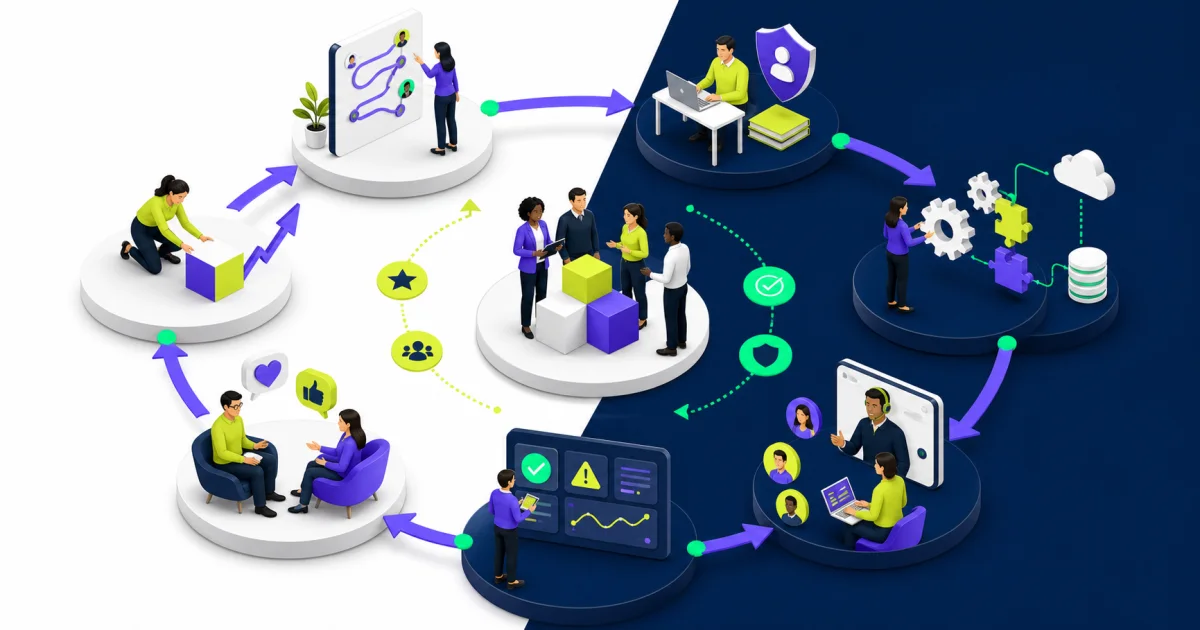
An employee experience program should not end at launch. Treat each journey as a service that can be observed and improved. Start with a clear outcome, define ownership, configure the workflow and integrations, communicate the change, support users, review evidence, and make focused adjustments.
The cycle works best when one person owns the journey end to end, even when several teams perform individual steps. That owner should bring HR, managers, IT, payroll, and employees together to review problems and decide what to change.
Measure Whether the Experience Is Working
Use a small set of measures tied to the journey's purpose. Survey scores can help, but they should be paired with operational evidence. A process that employees say they like may still create errors, and a process that is completed quickly may still be confusing.
Useful measures include:
- Completion rate and time to complete
- Overdue tasks and approval delays
- Data corrections and integration failures
- Support requests by topic
- Manager participation and response time
- New-hire readiness at day one
- Time required to resolve employee questions
- Qualitative feedback from affected users
Establish a baseline before changing the process. Review the results at an agreed cadence, segment them where useful, and investigate the story behind the numbers. Avoid targets that encourage people to close tasks quickly without resolving the underlying need.
A Practical Implementation Roadmap
1. Discover
Interview a representative group of employees, managers, and process owners. Map the current journey and identify repeated friction, risk, and avoidable handoffs.
2. Prioritize
Select a few journeys using impact, frequency, risk, and implementation effort. Define the desired outcome and baseline measures for each one.
3. Design
Simplify the process before configuring it. Confirm data ownership, roles, policies, exceptions, communications, integrations, and support.
4. Test
Test realistic scenarios with employees and managers, including edge cases. Confirm permissions, notifications, mobile use, integration behavior, and recovery steps.
5. Launch and Support
Explain what is changing, why it matters, and where to get help. Give managers role-specific guidance and ensure support owners can see and resolve issues.
6. Improve
Review operational measures and feedback after launch. Fix the most consequential friction first and document the decision so the process remains governable.
Common Mistakes to Avoid
Several patterns weaken an otherwise thoughtful HiBob implementation:
- Automating a confusing process before simplifying it
- Treating launch communications as sufficient training
- Giving managers responsibility without time or guidance
- Creating integrations without monitoring or ownership
- Measuring activity instead of employee or business outcomes
- Collecting more people data than the organization can govern
- Assuming a product feature guarantees adoption or trust
- Allowing exceptions to become an undocumented second process
The answer is rarely more configuration. It is usually clearer ownership, better data, a simpler journey, or more useful support.
Make HiBob Part of a Better Operating Model
HiBob can provide a strong platform for people data, self-service, workflows, and connected HR operations. The employee experience improves when the organization uses those capabilities with disciplined journey design, responsible data practices, prepared managers, and continuous improvement.
Start with one high-value journey, make its ownership and outcome explicit, and learn from real use before scaling the approach. If you need help planning or improving the platform, explore EVOCS' HiBob services or managed services. You can also compare the approach with legacy HR systems.
Sources: HiBob Core HR, HiBob integrations, HiBob API documentation, HiBob API getting started, HiBob security, and HiBob AI Trust Center.