
The future of work with Workday depends on how leaders connect workforce decisions, skills, operating capacity, employee experience, and responsible technology use. A cloud platform can provide shared data and workflows, but HR still needs to decide which problems matter, who owns each decision, and how the organization will measure the result.
Remote and hybrid work remain part of the discussion, but they no longer define it. Organizations also need to plan changing skill demand, redesign work, support managers, govern artificial intelligence, serve employees across channels, and align workforce costs with business plans.
Start With Workforce Decisions, Not Product Features
Begin with the decisions that leaders struggle to make today. A useful future-of-work program might need to answer where a critical capability is missing, whether to hire or develop talent, how a location change affects capacity, which roles need redesign, or where managers face preventable administrative work.
Write each decision in practical terms:
- Who makes the decision and who provides input?
- Which worker populations, jobs, locations, and time periods are in scope?
- Which data supports the decision?
- Which options can the decision maker change?
- Which legal, financial, or policy constraints apply?
- Which outcome will show whether the decision helped?
This approach prevents a feature-led rollout in which the team activates dashboards, skills, automation, or AI without a defined operating purpose. It also gives the implementation team concrete scenarios to configure and test.
Build a Dependable Workforce Data Foundation
Workforce planning and AI-assisted recommendations inherit the quality of the underlying worker, job, position, organization, location, compensation, time, talent, and skills data. Gaps that seem manageable in an HR transaction can become misleading when the same data drives an enterprise forecast or employment decision.
Define ownership by data domain. HR operations may maintain worker events, compensation may own pay structures, talent teams may govern proficiency models, and finance may approve workforce-cost assumptions. One accountable owner should settle definition conflicts for every shared measure.
Monitor the conditions that affect decisions:
- Missing or outdated job and position attributes.
- Duplicate or inconsistent organizations and locations.
- Skills recorded without evidence, proficiency, or recency.
- Contingent workers excluded from capacity views.
- Late transfers, terminations, or leave events.
- Different headcount and full-time-equivalent definitions across reports.
- Sensitive attributes appearing in reports or models without a business need.
Quality rules should connect to operational action. A completeness percentage has little value when no team owns the correction or understands which decisions the missing field affects.
Use Skills Data for Specific Talent Questions
A skills strategy needs more than a long taxonomy. Decide which business problems require skills information and which level of precision is useful. Recruiting may need evidence that a candidate can perform a task, while workforce planning may need a broader view of capability supply and demand.
Workday describes skills capabilities across talent optimization, workforce planning, recruiting, learning, and internal mobility. Treat vendor capability as the starting point for design. Your organization still needs rules for skill definitions, proficiency, evidence, inferred skills, employee confirmation, manager input, recency, and retirement.
Prioritize a limited set of roles or capabilities where better information will change an investment decision. Test whether leaders use the data to choose among hiring, development, redeployment, automation, contracting, or work redesign. Expand the scope after the organization can maintain the first domain.
Do not treat an inferred skill as a verified qualification. Show the source and confidence where the product permits, give people a way to correct their profile, and require stronger evidence for regulated, safety-critical, or consequential work.
Connect Workforce Planning to Finance and Operations
Future workforce plans should translate business demand into roles, skills, capacity, timing, location, and cost. HR, finance, and operating leaders need shared assumptions so they can compare options rather than debate whose spreadsheet is correct.
Workday’s talent planning overview describes planning by position, job level, or skills and comparing different workforce mixes. A useful implementation defines the drivers behind those scenarios, such as revenue, service demand, project pipeline, store volume, production capacity, or regulatory workload.
Keep scenarios distinct from approved plans. A team may compare hiring, internal mobility, vendor capacity, location changes, and process automation without committing to each action. Record the assumptions, owner, date, and decision associated with the selected scenario.
Review forecast accuracy after actual results arrive. Persistent over-hiring, delayed starts, unused requisitions, or underestimated attrition point to weak assumptions or operating follow-through. Update the model rather than treating forecast variance as a reporting exercise.
Design Flexible Work Around the Work Itself
A workplace policy should reflect the task, team, customer, location, security requirement, accessibility need, and labor market. One rule may not fit a software team, clinical operation, field service group, distribution center, and corporate function.
Use Workday data to support the policy, not to replace management judgment. Review role requirements, location, schedule, performance goals, time and absence patterns, employee feedback, and service outcomes with appropriate privacy controls. Avoid using a single activity measure as a proxy for contribution.
Configure processes for the exceptions employees and managers encounter. A transfer may change work location and payroll treatment. A flexible schedule may affect time capture or eligibility. An accommodation request needs a confidential route and appropriate human review. The employee experience depends on how these connected events work, not on the policy page alone.
Improve Employee Experience Through Completed Tasks
Employee experience is often discussed through portals, personalization, or engagement scores. Employees experience the system through specific moments: applying, onboarding, changing personal information, requesting leave, finding policy guidance, receiving pay, developing skills, moving roles, and getting help when something fails.
Workday’s employee experience overview describes self-service, journeys, case management, personalized guidance, and continuous listening. Evaluate those capabilities with real scenarios and representative users, including mobile users and people who rely on assistive technology.
Measure task completion, error rate, time to resolution, repeated contacts, abandoned requests, accessibility issues, and employee corrections. A high login rate does not prove that an employee found the answer or completed the process.
Give managers the context and authority to act. A manager dashboard that surfaces an issue without explaining the definition, next step, or policy boundary can create more work for HR and less confidence in the data.
Govern Workday AI as Employment Technology
AI can assist with recruiting, skills, learning, employee support, workforce insights, scheduling, and document work. Each use case affects different people and carries different risk. Maintain an inventory that records the purpose, users, data, output, affected decisions, vendor, model or feature version, human reviewer, and monitoring plan.
Workday publishes principles that include human potential, social impact, fairness, and transparency on its responsible AI page. Customers remain responsible for how they configure, integrate, govern, and use a feature in their own employment processes.
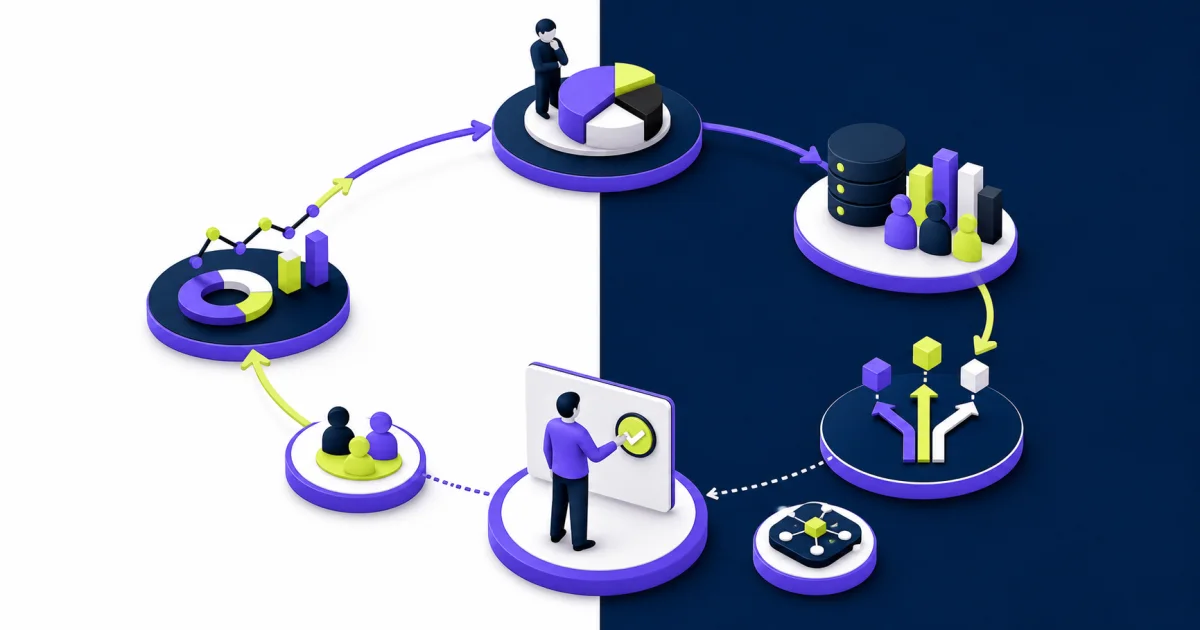
The NIST AI Risk Management Framework organizes voluntary risk work around Govern, Map, Measure, and Manage. That structure can help HR, legal, security, privacy, data, accessibility, and business owners assess an employment use case before launch and monitor it afterward.
For AI that informs hiring, promotion, performance, pay, scheduling, termination, or another consequential decision, define meaningful human review. The reviewer needs relevant context, authority to disagree, a documented escalation route, and enough time to evaluate the recommendation.
The U.S. Equal Employment Opportunity Commission’s guidance on employment tests and selection procedures explains that federal anti-discrimination laws apply to selection tools and that procedures may create legal concerns when they disproportionately exclude a protected group without adequate justification. Review current legal requirements in every jurisdiction, assess potential adverse effects, support reasonable accommodations, and retain appropriate evidence of validation and monitoring.
Turn Analytics Into an Operating Rhythm
Workforce analytics should help a named leader make a recurring decision. Define the measure, population, time basis, owner, access rule, threshold, and action before building the dashboard.
A practical review might connect:
- Workforce capacity with demand and approved financial plans.
- Skills gaps with recruiting, learning, mobility, and contractor decisions.
- Time, absence, and schedule data with operational coverage.
- Recruiting pipeline with hiring forecasts and start-date assumptions.
- Employee support patterns with process or policy changes.
- Workforce movement with retention, succession, and organizational design.
Show uncertainty and limitations. A forecast is an estimate, a skills profile may be incomplete, and an engagement measure does not explain every cause. Give decision makers enough context to use the data responsibly.
EVOCS’s HR analytics implementation guide provides additional detail on definitions, governance, delivery, and adoption.
Prepare the Operating Model for Continuous Change
Workday releases, integrations, policies, organizational changes, and new AI capabilities create a continuing product-management responsibility. Name owners for configuration, security, data, integrations, reporting, AI governance, testing, communications, and support.
Use a governed backlog. Each request should state the problem, affected users, expected outcome, data and control implications, dependencies, and evidence required for acceptance. Prioritize changes that improve a workforce decision or remove a documented operating failure.
Test the full process after releases and configuration changes. A field may still appear while a report, integration, approval, security group, notification, or mobile experience behaves differently. Keep regression scenarios for high-consequence worker events.
Plan for stabilization after major changes. Review failed transactions, access questions, integration errors, support volume, incomplete tasks, and user corrections. Assign unresolved issues to an owner and track them until the operating team accepts the result.
Use a Phased Future-of-Work Roadmap
Choose One Decision Domain
Select a workforce problem with an accountable sponsor, available data, and a measurable baseline. Examples include staffing a critical function, improving internal mobility for one job family, reducing onboarding failures, or shortening an employee-support process.
Map the Current Process and Data
Document who decides, which systems and files they use, where delays or manual corrections occur, and which controls apply. Profile the underlying data before promising an analytical or AI outcome.
Design the Future Workflow
Define roles, decision rights, system behavior, integrations, exceptions, human review, communications, and support. Remove steps that exist only because the old system required them, but preserve controls with a valid business or legal purpose.
Pilot With Representative Users
Include managers, employees, HR specialists, analysts, administrators, accessibility participants, and support teams as the use case requires. Test difficult cases and incomplete data alongside the happy path.
Measure and Expand
Compare the result with the original baseline. Expand to another population or use case after the team can operate the first release, explain its decisions, and correct errors without relying on the project team.
Measures That Show Operational Progress
Choose measures that connect to the selected decision:
- Time from workforce need to an approved plan or action.
- Forecast accuracy for roles, capacity, starts, and workforce cost.
- Percentage of priority skills with current supporting evidence.
- Internal fill rate for roles included in the mobility program.
- Employee task completion and correction rate.
- Manager decision time and unresolved exception age.
- AI recommendations reviewed, overridden, escalated, or withdrawn.
- Data-quality failures that block or materially change a decision.
- Support volume and time to restore a failed process.
Avoid treating training attendance, feature activation, dashboard views, or AI usage as the final outcome. Those measures can help explain adoption, but they do not prove that the organization made a better workforce decision.
Common Future-of-Work Mistakes
Making hybrid work the whole strategy: Location policy receives attention while skills, capacity, process design, and management remain unchanged.
Starting with a product demonstration: Features drive scope before leaders define the decision or problem.
Building a skills catalog without ownership: Profiles become stale and teams cannot explain how skills affect action.
Treating AI as one capability: Distinct employment use cases receive no individual risk, validation, or monitoring review.
Calling data real-time without defining freshness: Leaders assume a dashboard includes events that have not completed or integrated.
Measuring activity instead of outcomes: Logins and completed training replace evidence about task quality, decision time, or workforce results.
Leaving the operating team until launch: The project delivers configuration without enough ownership, support, or release capacity.
Make the Future of Work with Workday an Operating Practice
The future of work with Workday becomes practical when leaders tie technology to decisions they own. Build dependable workforce data, govern skills, connect workforce plans to business demand, improve real employee tasks, and apply meaningful human oversight to AI-assisted work.
Organizations with complex workforce models, fragmented data, or limited internal capacity may benefit from structured implementation and operating support. EVOCS can help define the roadmap, configure and integrate the platform, establish governance, and stabilize the result through its implementation and managed services practices.